Is your agent experience powering your CX — or sabotaging it?
On this episode, we explore the hidden cost of overlooking agent experience — and how it impacts your customers.
Your contact center agents handle hundreds of customer interactions every week, from routine questions to complex issues. When your agents feel empowered, they resolve problems with creativity and empathy, turning satisfied customers into loyal advocates and ultimately helping you win the moments that matter. When they don't feel empowered, they deliver transactional service, avoid taking initiative and may even start looking for the exit — sabotaging your CX in the process.
Join Ken Hughes, keynote speaker, consumer behavioralist and author, and Estuardo "Ligo" Ligorría, regional vice president of operations for the Americas at TELUS Digital, as they reveal what the best CX leaders get right, what it means for them to truly “show up” for their frontline teams, and how to navigate the tension between efficiency and the human connection.
Follow and listen:



Guests
 Ken HughesKeynote Speaker, Consumer Behavioralist and Author
Ken is known as the King of Customer Experience, a title earned over more than two decades leading his own consumer insight agency. He blends consumer and cyber psychology, digital anthropology and behavioral economics to explore what today's consumers need and predict where they're headed next. Named to CX Network's Top 50 CX Influencers list in 2025, he speaks more than 80 times a year across five continents. Ken has delivered a TEDx talk, lectures part time at university level and still performs improv, drawing on a background in theatre.
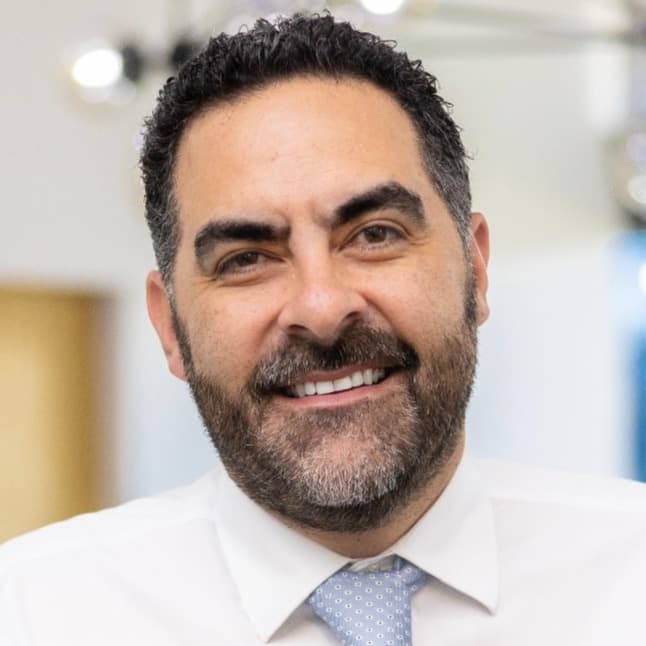 Estuardo “Ligo” LigorríaRegional VP, Operations, Americas, TELUS Digital
Estuardo, also known as "Ligo", joined TELUS Digital Guatemala in 2009 as corporate controller, moving into operations in 2011 and rising to VP of Operations in Guatemala by 2014. In August 2020 he took on his current role, overseeing operations across the Americas, with direct responsibility for P&L, organic growth and operational efficiency. He also serves on the board of the Guatemalan-Canadian Chamber of Commerce and the Contact Center and BPO Commission of the Guatemalan Exporters Association. He's an avid athlete who has run four marathons and enjoys playing golf.
Episode topics
- 0:01 - Is your agent experience powering your CX—or sabotaging it?
- 1:16 - Why can't agent experience be treated as less important than customer experience?
- 2:54 - What is employee lifetime value (ELTV) and why does it matter?
- 4:27 - What happens when connection matters more than efficiency?
- 5:59 - Why is attrition the laziest cost in business?
- 8:19 - What does showing up for your team actually look like?
- 10:49 - How does empowerment create moments that matter?
- 13:45 - What happens when culture extends beyond the workplace?
- 18:59 - How do you build an environment where employees want to stay?
- 21:44 - Can you invest in both people and technology?
- 23:05 - How is AI changing what agents do?
- 24:23 - How can AI make agents better at complex interactions?
- 27:24 - What makes human connection more valuable as AI advances?
- 29:45 - How do you measure agent experience success?
- 32:41 - What does radical transparency with clients look like?
- 34:50 - What question should CX leaders ask about employee experience?
- 35:52 - What should you focus on as you evaluate your agent experience?
Transcript
[00:00:01] Robert Zirk: You measure the performance of your agents by way of metrics like customer satisfaction, first call resolution and average handle time. But are you paying attention to the experience of your agents?
[00:00:13] Estuardo "Ligo" Ligorría: Attrition is the laziest cost in the business.
[00:00:16] Robert Zirk: In the race to optimize efficiency, many brands are making a choice — often without realizing it.
[00:00:22] Ken Hughes: A tired, overworked, under-rewarded employee who doesn't feel that they have a community and belonging in their employment is never going to go off-piste.
[00:00:32] They'll be transaction-led, not relationship-led and therefore, you'll always have an issue trying to deliver outstanding customer experience.
[00:00:38] Robert Zirk: Brands that sacrifice employee experience and overindex for productivity don't just lose talent. They lose customers too.
[00:00:46] Ken Hughes: The law of economics kicks in quite fast. The thing that is scarcer becomes more valuable. And I think human contact and human relationship and human interaction will become a little bit more scarce.
[00:00:55] Robert Zirk: Today on Questions for now, I'm joined by consumer behavioralist Ken Hughes and TELUS Digital's Estuardo "Ligo" Ligorría as we ask: Is your agent experience powering your CX — or sabotaging it?
[00:01:16] Welcome to Questions for now, a podcast from TELUS Digital where we ask today's big questions in digital customer experience. I'm Robert Zirk.
[00:01:29] In the contact center, agent experience can't be ignored or treated as less important than customer experience. They're intrinsically linked.
[00:01:38] I spoke with Estuardo Ligorría, who goes by "Ligo", about this relationship between agent and customer experience. As regional vice president of operations for the Americas at TELUS Digital, he oversees more than 22,000 team members across multiple countries and sees this connection play out every day.
[00:01:57] Estuardo "Ligo" Ligorría: They just go together. If an employee has a great experience in their job. Like, if they feel capable, if they feel trained, if they feel they have the tools to do the job, if they feel they can make their metrics to earn their incentives, high probability that the customer experience is gonna follow.
[00:02:14] Robert Zirk: According to TELUS Digital research in collaboration with Statista, just last year, only 66% of enterprise leaders in the U.S. rated agent experience at a critical or high priority level among their digital CX priorities.
[00:02:29] But that also means that one in three leaders still aren't treating agent experience with the urgency it deserves.
[00:02:36] Ken Hughes is a keynote speaker, consumer behavioralist and author of Taylormaking: A New Era of Modern Branding and Customer Connection. He's spent decades studying human behavior and connection and views the link between employee experience and customer experience as inseparable.
[00:02:54] Ken Hughes: There's no point in trying to maintain customer lifetime value unless you have employee lifetime value — the same people, the same talent, the same passion to deliver that customer value.
[00:03:01] Robert Zirk: Employee lifetime value, or ELTV, represents the total net value an employee makes to your organization over the course of their tenure. It's not just about how long they stay, but the depth of expertise they build, the customer relationships they develop and the institutional knowledge they accumulate.
[00:03:20] So if your goal is to create customer lifetime value via employee lifetime value, what does that actually require? Ken argues that most organizations set the bar too low. They aim for employee satisfaction when they should be aiming higher.
[00:03:36] Ken Hughes: The definition of satisfaction is when experience equals expectation. So when you deliver something that was my expectation, I'm in theory satisfied. But really all you've done is you've given me what I expected to get.
[00:03:47] Robert Zirk: In other words, satisfaction isn't enough. We've previously covered this from a customer perspective on our episode Why do satisfied customers leave?, but it applies equally to your employees. In both cases, you need something deeper. For Ken, this shift in approach has even led him to stop using the term "experience."
[00:04:09] Ken Hughes: I've replaced it with the word intimacy, customer intimacy and employee intimacy. Experiences can still be interesting and story-based and valid, but they don't always drill down into emotional and belonging. And so the definition of intimacy is fostering a sense of closeness.
[00:04:27] Robert Zirk: Ligo shared a story with me that perfectly illustrates what Ken is describing: a moment when connection mattered more than efficiency. It took place when he and other members of his management team visited one of our contact centers on Christmas Eve.
[00:04:42] Estuardo "Ligo" Ligorría: We came to the floors to see our teams and I wanted to listen to a couple of calls. This person, he raises his hand at his station, "Come listen to this call."
[00:04:50] And I sit down and this lady had called into the center, into this account, a brand that she was a user. She had no problem. She had no asks. All she wanted was to talk to someone. This person was by herself at home on Christmas Eve and she just wanted some company, right?
[00:05:06] So our team member couldn't get off the phone. He was worried that his stats, his AHT or productivity stats would get shattered with this call that was going on for 18 or 21 minutes. But I was like, "Hey, listen, you're doing a great thing for our customer. This is what this customer needs today." And I think the call lasted like 27 minutes.
[00:05:26] It's very emotional, but it's also a very good example of how our teams resolve and react to people, whatever their needs.
[00:05:33] Robert Zirk: That moment of human connection, where the agent chose empathy over strict efficiency, is the sort of action that can foster deep customer loyalty rather than mere customer satisfaction.
[00:05:45] But those moments only happen when employees feel empowered to make those choices. When the employee experience breaks down, your frontline agents will leave. Ligo considers this one of the most avoidable fumbles in CX.
[00:05:59] Estuardo "Ligo" Ligorría: I believe that attrition is the laziest cost in the business.
[00:06:04] Robert Zirk: Ligo clarified by noting that some attrition in CX is unavoidable. It's unrealistic to expect every employee will stay forever. But every time an agent leaves, there are costs that extend beyond their departure.
[00:06:18] Estuardo "Ligo" Ligorría: That churn just resets all your investment on the individual. And when it happens to hundreds or thousands of folks, the cost is crushing because you have to redo the cycle all over again.
[00:06:30] Robert Zirk: Ligo speaks from the perspective of running contact center operations at massive scale — thousands of TELUS Digital agents across multiple countries. But even if you're running a smaller CX team, that cycle can be even more damaging in a different respect: because every agent you lose represents a larger percentage of your overall CX capacity.
[00:06:51] A report from McKinsey found that 41% of contact center leaders need three to six months to bring new employees to perform at the level they need. And another 20% need more than six months to get there.
[00:07:06] After investing months in training, what causes those same agents to leave? A Metrigy study found that 52% of CX leaders identify agent burnout as a key factor in employee turnover. Burnout often stems from factors leaders can control, and that's exactly why Ligo calls attrition the "laziest cost" — because it's preventable.
[00:07:29] Estuardo "Ligo" Ligorría: Even though I am conscious that attrition is never going to be zero, I do think that leaders could do more to avoid it.
[00:07:36] I challenge my leaders: clear your calendars. Your job, you're gonna do it better in the floor with people than reviewing reports all day.
[00:07:44] Robert Zirk: Ligo's example reflects the scale he manages, but the same principle is universal: leaders need to be visible and accessible to their teams.
[00:07:53] Estuardo "Ligo" Ligorría: We sometimes stay too comfortable in our office or a cubicle because it's easier to sit on a call, have a cup of coffee, fill out a report, send a spreadsheet, analyze some data, answer 16 emails, then go and walk your nine floors, enter your 40 operations and say "Hi" to everybody on the site.
[00:08:11] Because if you do that, you're gonna take a couple of hours of your day, but the other work that you really need to do is still going to be waiting for you when you get back.
[00:08:19] Robert Zirk: Ligo mentioned that leaders need to show up for their teams. So I asked him: what does that look like day-to-day for CX leaders?
[00:08:27] One example he shared was that he schedules small group sessions with frontline agents specifically to hear their feedback.
[00:08:34] Estuardo "Ligo" Ligorría: I make a big point in organizing my focus group sessions with team members at least two or three times a year. Like, I'll do five or six sessions in a week. Maybe in the next quarter I'll do three more. I tend to have focus groups that aren't very large, four or five people, because then you can be with these folks one hour and you fully understand what they need, what they would like to change, what have they seen, what recommendations they have.
[00:08:57] A lot of the things that we have at the centers actually come from recommendations from the frontline team members. And then we take all that feedback away and we try to implement. And that's a great way to know people and how you follow up to those asks, how you send them emails to carry forward the process on fixing an issue that they brought up to you, I think is very important.
[00:09:16] I try to participate in the activities when I'm at the sites, like if we have a Mother's Day activity or a Halloween activity. Special things that we do for team members, I try to show up. I think it's important that leaders participate in things that we do for our team. It gives it a lot of value and it all stems in paying attention.
[00:09:35] So you walk into an elevator, or you're in the elevator lobby. There's probably 10, 15 people there. You have two choices, right? You get on your phone and you don't pay attention to anyone or you put away your phone and you talk to people.
[00:09:48] "How's your day going? How are you doing? What program are you serving?" It just creates a lot of good rapport with folks. And the effect on people is incredible, because then they know who you are, right? So if you're able to do that, take advantage of the spaces where you're with someone, like, make that space meaningful — even though you can't do it every day, it creates a great effect on culture.
[00:10:11] Robert Zirk: Ken emphasizes that showing up for employees — being present, authentic and invested in their experience — is especially critical when it comes to recruiting and retaining CX talent.
[00:10:23] Ken Hughes: You hear all the time, "Oh, you can't recruit good Gen Z people and they won't stay." And yeah, they won't come. And they won't stay unless the leadership is authentic and vulnerable. 'Cause that's real. There's a realness to that. And so, again, if you loop it back to employee experience, people are looking for jobs where their leaders and their managers are real people.
[00:10:38] And what do you mean by real people? I mean people with vulnerability and authenticity and passion and belief and desire to foster belonging and community and all that's what they want from work.
[00:10:49] Robert Zirk: When employees feel valued and empowered, they can deliver better customer outcomes to win the moments that matter.
[00:10:56] Ken referenced how the Ritz-Carlton provides a $2,000 budget to frontline staff to make a difference for customers at any time.
[00:11:04] Ken Hughes: Now, that sounds like a lot of money and that budget is there to use without manager discretion.
[00:11:07] So you don't have to go and look for your manager and say, "Look, I'd like to spend $500 in this pain point with this customer." You can just do that without any approval. And that's their kind of commitment to employee empowerment: that any employee in the front line can make a difference to a customer.
[00:11:20] Now, the reason that it's so high is because the customer lifetime value is around quarter of a million for the Ritz-Carlton. So an average customer over their lifetime will spend about a quarter of a million with the Ritz. So instead of making their employees focused on the transaction that stay, that weekend, they kind of teach them to see the $250,000 above everyone's head and say, you know, "Treat the customer as if they were spending a quarter of a million today with you." 'Cause they will over time, but treat it as if it's today. And that might change things. And it does change things.
[00:11:45] Robert Zirk: To illustrate how this policy works in action, Ken shared the story of a customer who had checked out of the Ritz-Carlton in Atlanta in the early morning to fly to an important pitch meeting in Hawaii.
[00:11:56] Once he boarded the plane, he wanted to review the slide deck, only to find out...
[00:12:01] Ken Hughes: His laptop wasn't in his bag. And he had that panic moment that we all do when we search for our phone. I think, "Oh my God, where is it?" And he kinda goes, "Oh no, please, please don't.
[00:12:08] Oh, did I leave it in the hotel?" And so he rings the hotel in a panic when he lands and he says, "Can you see, did I leave my laptop in the room?" And the room hasn't even been turned yet. Like, it's still early. And so they dispatch housekeeping and this lady goes in and opens the door and there it is, on the desk.
[00:12:19] And she has a choice now, you see? So usually, in the Ritz or most hotels, that goes to guest services and guest services process it and maybe he'll have it in two days' time. Maybe they'll do something amazing, go beyond expectations and use a courier instead of the mail, but it's not gonna help him today, is it? 'Cause he's got his really important presentation in Hawaii.
[00:12:36] And so the lady, having just been through her empowerment training and now knowing that that budget was there, takes her apron off, puts the laptop under her arm, goes downstairs, gets in a cab, drives to the airport, buys herself an economy ticket to Hawaii on the next flight out, boards the plane, gets off, finds his hotel, knocks on his door and gives him the laptop.
[00:12:52] Hours later, the man's holding his laptop and he can't believe that, that this lady has just done this. The manager probably doesn't even know where she's gone. Did she get fired? No. Absolutely not. She gets celebrated in the organization for doing the very thing that they preach.
[00:13:06] You know, make a difference in a customer's life, put a smile on the customer's face, give them a story to tell their peers. And that man, who knows, went on to maybe book five or six conferences at the Ritz worth $3 million dollars? Yeah, who knows? But every touch point counts and the point about reward, then, is how does that lady feel that day going home from work?
[00:13:21] And this is a really interesting question because she hasn't spent a day just fitting sheets and cleaning bathrooms now. And she's done all those things. But she now feels that she can make a difference to someone's life at any given point. She works inside an organization that celebrates that. She knows that it's there, both in terms of time and budget.
[00:13:37] And if we can get to that place in any organization, then you've got empowered employees and empowered employees drive the engine of customer experience forward.
[00:13:45] Robert Zirk: When leaders live those values every day, it creates a culture that extends beyond policy and procedure. Ligo told me a story that demonstrates this — about a TELUS technician in Canada who wasn't even on shift at the time.
[00:13:59] Estuardo "Ligo" Ligorría: He's driving home from work one evening, snowy on the road, terrible way to drive going back home and he sees a car broken down on the road. So this TELUS team member pulls over to see if he can help.
[00:14:13] And it's a couple, recently married, going to the airport for their honeymoon trip. The car broke down in the middle of the street with this weather and they were gonna miss their flight. So the team member gives him his car so that they could go to the airport.
[00:14:28] Robert Zirk: Think about that for a second. He doesn't know these people at all. And TELUS hasn't even come up in the conversation — he has no idea if they're customers. But he gives them his car anyway.
[00:14:40] Estuardo "Ligo" Ligorría: I imagine that this happened after several minutes of conversation and a lot of anxiety, especially from the bride. They take his car. He stays with the broken car of these two strangers. Fixes the tow truck, everything, gets the car towed, takes it to the house of the people. So this is huge example of customer service, but this is what people in this company do for others, right? This is just the way we roll.
[00:15:02] Robert Zirk: But employee empowerment can't be just a process or a policy. It has to be championed by leadership.
[00:15:09] Ken Hughes: You can't put an employee experience program in place, or a customer experience program in place, unless the leaders are living it every day and preaching it every day. If there's a break in that, then people don't believe you. They're not gonna step up when we ask them to.
[00:15:21] Robert Zirk: Ken shared another anecdote. This one, a moment when United Airlines employees showed up during a customer's crisis.
[00:15:29] Ken Hughes: There was a man called Kerry Drake, just a regular guy living in San Francisco, and he got that call that his mom was about to pass away. Now, she lived in Lubbock, Texas, so he's on the other side of the country.
[00:15:38] Robert Zirk: So he books a flight to Lubbock, but the flight isn't direct. He can only get there via a connection in Houston. The problem is that the connection was only 40 minutes long, which meant that there was next to no margin for any kind of delay.
[00:15:53] Ken Hughes: And he thinks, "Okay, that's the only way to get home tonight." And so he takes it. So he's sitting on the first flight and the pilot comes on and says, "I'm sorry, we have a bit of an air traffic control restriction here and we're gonna be grounded for 45 minutes."
[00:16:04] And instantly, he knows that's it. That was his connection time. So now he's gonna not make that connection. He's not gonna make it to the bedside of his dying mother.
[00:16:11] So he starts crying on the plane, understandably. And the air hostess sees him crying and brings him some tissues to dry his tears. And in the process of that, she kind of talks to him a little bit and gets the story as to why he's crying.
[00:16:21] And she thinks, "Oh my God, that sucks." 'Cause it does, like, it sucks that's happening to this poor guy. And so she wanders back up the aisle and ends up chatting to the captain.
[00:16:29] Robert Zirk: And the captain is empathetic to this man who's about to miss his last chance to say goodbye.
[00:16:36] So he gets on the radio to air traffic control and asks to speak with the pilot of the connecting plane in Houston.
[00:16:42] He shares Kerry's story and both pilots come to a decision: the Houston plane is staying on the ground just long enough to ensure Kerry makes it so he can get to Lubbock to be with his mother.
[00:16:55] Ken Hughes: And so, this is obviously against the United policy, but those two pilots decide sometimes doing the right thing is more important than doing the profitable thing. And so they take off eventually and they make up a little bit of time in the air, that first plane, and he's still 30 minutes behind.
[00:17:10] Robert Zirk: Meanwhile, Kerry doesn't know that this has happened behind the scenes. All he knows as he's sitting on the plane is that, regardless of the outcome, he has to give it everything he has to get to that next flight.
[00:17:23] So when the plane lands, there's only one thing on Kerry's mind: Run.
[00:17:29] So he sprints through the airport and once he reaches his connecting gate...
[00:17:34] Ken Hughes: he meets the second pilot, who's standing at the top of the ramp and not on the plane and his arms folded. He says, "Mr. Drake, please stop. Stop running. There's no need to run. This plane goes nowhere without you on board, sir."
[00:17:44] Robert Zirk: He boards the plane, makes it to Lubbock and makes it to his mother's bedside to say his goodbyes.
[00:17:52] Ken Hughes: And it becomes a viral story afterwards, of course. And, you know, who does Mr. Drake fly with for the rest of his life? Like, even if United don't fly to his destination, I can see him taking the closest route and hiring a bicycle for the rest. You know, he will never fly another airline. And that's because in the moment that mattered to him, the brand showed up. And that's true of every brand listening to this right now.
[00:18:12] Robert Zirk: So what's the common thread in each of these examples?
[00:18:15] Ken Hughes: A tired, overworked, under-rewarded employee who doesn't feel that they have a community and belonging in their employment is never going to go off-piste, is never going to put their head above the wall to see, "maybe there's some other way we can do this."
[00:18:29] They will follow procedure and policy. They'll be transaction-led, not relationship-led. They will do the minimum they can to get their paycheck and, therefore, you'll always have an issue trying to deliver outstanding customer experience.
[00:18:40] Robert Zirk: But when employees do feel valued and empowered, the opposite happens.
[00:18:45] Ken Hughes: The moment you have empowered employees who care about their work and if they understand that their job is to connect with customers, the product or service is only a conduit. Their job is to connect. And if you can do that, then you start to lay down the foundations for customer lifetime value.
[00:18:59] Robert Zirk: So how do you create an environment where employees feel a sense of community and are equipped to deliver exceptional experiences?
[00:19:08] Ligo cited the example of TELUS Digital's partnerships with universities and academic institutions to subsidize higher education for team members at a lower cost.
[00:19:18] Each of TELUS Digital's contact centers include breakout spaces, dining areas, recreational facilities, and crucially, training rooms.
[00:19:28] Estuardo "Ligo" Ligorría: We have all the training rooms that are empty in the afternoon. What you do is you turn them into a university campus. So you'll have professors come here and deliver class like you were on campus.
[00:19:40] Robert Zirk: Instead of fighting traffic to get to an evening class across the city, or ruling out further education entirely because of scheduling conflicts, team members can walk from their desk to their classroom in the same building,
[00:19:53] Estuardo "Ligo" Ligorría: I think that learning is key. Even if you don't work here forever, if you gain certain skills at TELUS Digital you can use in your future as a business professional is a win-win for everyone.
[00:20:06] Because we want better skilled people in our company. Some might leave for better opportunities, which is fine, but the ones that stay, that also have been promoted into learning, are going to be better leaders for you, better business professionals, and that is a way that you create tenure because if someone is getting relief in something that is going to make them better, the results speak for themselves.
[00:20:32] Give an employee a three, four year tenure versus three weeks, gets you a better professional and proficiency, someone close to the community, instead of churn.
[00:20:41] Robert Zirk: But it's not just about education. It's about providing a sense of purpose, which TELUS Digital cultivates by organizing TELUS Days of Giving and other volunteer events in the regions where it operates.
[00:20:53] Estuardo "Ligo" Ligorría: It's part of our mission. It's part of our brand, it's our culture. We believe that giving where we work and serve is our responsibility.
[00:21:03] Robert Zirk: Since 2016, more than 130,000 TELUS Digital team members have contributed more than half a million volunteer hours.
[00:21:12] Estuardo "Ligo" Ligorría: People just transform when we have a volunteer activity. That feeling of "I was part of this, I helped here, I did this." And it is very important in the human aspect of an individual.
[00:21:25] I'm not comparing it to pay, I'm not comparing it to responsibility. It is just, as good human beings, the fact that you can do things for others repeatedly is because it's part of your brand. And I think that people really are driven by that because of how it feels to do something for others.
[00:21:44] Robert Zirk: Education programs, volunteer initiatives and team activities are just a few of the ways organizations can invest in the employee experience to build tenure and engagement.
[00:21:55] These initiatives require ongoing commitment and resources. However, across industries, many organizations face pressure to find faster, more measurable returns during challenging economic times. That pressure is part of what's driving AI adoption. AI in the contact center, when leveraged effectively, can increase efficiency — for example, by lowering your cost to serve.
[00:22:22] But there's a caveat: AI tools are only as effective as your team's ability to use them.
[00:22:28] Research from Forrester found that only 32% of CX teams have the data literacy needed to use AI responsibly. Without proper training, agents try the tools unsuccessfully a few times, then quietly abandon them. Instead of doing more with less, you've created frustrated employees and wasted investment.
[00:22:49] But when AI is implemented thoughtfully, with proper training for agents and a clear understanding of what it should and shouldn't do, it can genuinely enhance what human agents are capable of.
[00:23:01] Ligo explained how he sees the work evolving for agents.
[00:23:05] Estuardo "Ligo" Ligorría: There's always going to be work for humans. Our team members are probably going to have to acquire different skills to lead the more complicated interactions, the ones that are going to need different type of troubleshooting to get the job done that a machine probably won't.
[00:23:20] So even though we will stop doing the more basic manual procedural work, like password resets, simple stuff like that will start getting evolved into just a process, not an automated process, like refunds, things have to fall under policy and those will be easy.
[00:23:39] But then there's things that are not as easy when you have a problem that you need to get resolved. Tons of people still struggle when a machine is on the phone on the other end and you just are pressing zero, like, 50,000 times to get to a person.
[00:23:51] So it is an evolution of how we are serviced. Tons of folks struggle with self-serve, and they'd just rather have someone help them do it, but eventually it will evolve. So humans will keep the more complicated multitasked interactions and the AI machine should be able to do everything else.
[00:24:09] Robert Zirk: According to PwC, companies in AI-intensive industries generate three times more revenue per employee than those with low AI adoption, meaning AI enabled employees can deliver greater employee lifetime value.
[00:24:23] So AI handles the routine work, freeing agents to focus on more complex interactions. But there's another way AI can amplify human capability: by making agents better at handling those complex interactions.
[00:24:38] When a customer calls the contact center, an agent needs to understand the customer's account history, past interactions and preferences, which could go back years — all while actively listening and responding in real time.
[00:24:52] Then they need to do that again for the next customer. And the next. For the rest of their day.
[00:24:58] That's where AI comes in. Call intelligence and interaction analytics can surface context instantly, giving agents the information they need without the monumental task of manually searching for and processing it all themselves.
[00:25:14] For quality assurance teams, this means the ability to shift from reviewing a small sample of calls to understanding patterns across every single interaction.
[00:25:24] Estuardo "Ligo" Ligorría: Now, the machine has every single call. So now you can really double down on "This is 15% of my problems, this is 80% of my problems, this is 40% of my problems." And then you can tackle the problem, right? You can help people get better at what they're going to do the most.
[00:25:42] Robert Zirk: And for supervisors, it means coaching becomes data-driven rather than anecdotal. As a result, agents get faster, more targeted feedback on the exact areas where they need to improve, reducing their time to proficiency and making them more capable of handling the complex customer issues Ligo just described.
[00:26:03] And when you equip your employees to succeed, they're much more likely to be engaged. Ligo shared another example of how AI is transforming agent preparation.
[00:26:14] Estuardo "Ligo" Ligorría: Before when you were in a classroom and it's your trainer and it's 15 people in the classroom and then you have to role play the calls, you'll have one individual come up to the front and you'll do a "call" together and you'll be the angry customer and the person is trying to help people understand what's gonna happen on the floor.
[00:26:32] And then you have 14 people looking at you. If you're not part of the exercise, probably you're not understanding the concept. And that was before.
[00:26:40] What our Agent Trainer does today, is that you have the interactions embedded in your computer when you're learning. So when the trainer says, "Okay guys, get your headsets on, you're gonna do Agent Trainer now", the machine has thousands of scenarios that it will throw at you by yourself. So everybody's practicing, right? So of course it helps. Imagine the amount of calls and scenarios that you can have people do and practice before the run compared to five years ago.
[00:27:10] Robert Zirk: Ligo is referencing Fuel IX Agent Trainer, TELUS Digital's AI-powered customer simulator, which can give every agent access to thousands of practice scenarios before they take their first actual call.
[00:27:24] AI is making agents more effective at their jobs, but it's also elevating the importance of what only humans can do. As Ken points out, there's an economic principle at work.
[00:27:36] Ken Hughes: The thing that is scarcer becomes more valuable. And I think human contact and human relationship and human interaction will become a little bit more scarce.
[00:27:43] And while the technology is amazing, using it the right place in the customer journey is really important to make people still feel valid.
[00:27:48] I think we're heading into quite a digital space, which is both positive and negative. There are definitely negatives and less human connection is one of them, but the brands that invest now in that relationship, in that human connection, will win. And the brands that just go "The AI is there. That'll do everything," will lose because we are still human and while efficiency is wonderful, you still enjoy interaction with a human.
[00:28:09] We all have that frustrating moment where "unexpected item on the baggage belt" in the supermarket or the passport scanner thing doesn't work and you think, "Oh God, I'd have been faster with a human." You know? So sometimes efficiency is great technology-wise, but often we crave human connection.
[00:28:23] Robert Zirk: Ligo clarifies that the goal isn't to choose between efficiency and empathy. It's to use technology to create space for more meaningful human interactions.
[00:28:33] He referenced the use of knowledge bases in creating faster and more helpful interactions with customers and how AI is improving agent processes.
[00:28:42] Estuardo "Ligo" Ligorría: Knowledge bases from the customer's systems have evolved a lot with AI. They've gotten better, so when you're in the middle of a call, it's not expected that you know every single thing that's going to get asked of you. But this is why you have the knowledge base where you can quickly go to to get quick responses. This was very manual and not as friendly before.
[00:29:03] Now, you just type and it goes. It helps you populate better. For example, a lot of our team members have to leave notes on work. And if you are an outsider and you try to understand these notes, you would think that they were in a language that you'd never seen before. A lot of abbreviations, a lot of acronyms, because they have to document process in calls quickly. But now AI does that for you. It summarizes the task, so it makes you more productive because you don't have to spend time in after call work. You just saved 5, 10 minutes in documenting.
[00:29:35] Having things at your fingertips where it'll help you do your job better. It is just going to help you be more professional, more crisp, to the point.
[00:29:45] Robert Zirk: If employee experience drives customer experience, how do you measure whether you're getting it right? Ken acknowledges that measuring the return on investment in your employees can be more complex than tracking traditional business metrics, but he warns against approaching it the wrong way.
[00:30:02] Ken Hughes: We get the question about ROI in CX and EX. "Show me the ROI that this stuff works." We can do that so easily in other places in the organization, in manufacturing or in R&D and in sales, we can say, "Show me the ROI of this investment." And out it pops a really clean formula, really clean number. Whereas in CX and EX, it's so relationship based, it's much more difficult.
[00:30:18] Robert Zirk: Ken challenged you, the listener, to think about this from the perspective of a relationship with someone dear to you.
[00:30:25] Now, imagine you come across a notebook written by that person. You open it. And oddly, it resembles an accounting ledger.
[00:30:33] Ken Hughes: And in that ledger is written all the nice things you've done for them on one side and all the kind of nasty comments and bad things you've done — you forgot to put the trash out on Wednesday — on the other side.
[00:30:44] And what they're doing is they're keeping a tally on the good things you do and the bad things you do.
[00:30:49] Robert Zirk: In other words, their affinity toward you, or lack thereof, is based directly on each thing you've done and the value assigned to it in each column.
[00:31:00] Obviously, this is an unhealthy way to relate to the people who matter most in your life!
[00:31:05] Ken Hughes: For some reason, we can understand why that's a bad thing in a personal relationship. But then in brands and business relationships, which is exactly what a brand is doing when they're looking for ROI on CX and EX, they're saying, "Well, here's what we're gonna do and what are we gonna get back from it?"
[00:31:17] So I move my clients away from using ROI to what I call DTI — a desire to invest. So now don't be focused on the return on investment. "What am I getting?" Because if you enter any relationship with "what am I gonna get out of this?" then it's not gonna be a very warm, emotive space you're gonna create.
[00:31:34] Robert Zirk: For Ligo, working as a CX transformation partner means his team members are on the front lines representing his client's brands, speaking directly with their customers every day. So he looks to customer sentiment and how the customer feels after the interaction.
[00:31:50] Estuardo "Ligo" Ligorría: It doesn't matter if you're very productive if the customer doesn't leave the interaction with a sense that their issues got fixed and a sense of confidence that whatever it is you promised, you delivered. And I think it starts from there.
[00:32:03] Customer experience, that's what the work is called. It's not called "be productive in taking calls." It's called customer experience. And you see a lot of companies have gone away from productivity a little bit. I mean, if a call could be resolved in less than eight minutes, you don't want the call to last 30. Productivity is always going to be important.
[00:32:23] But the bigger effort is in the other piece: how my customer walked away feeling about my brand. How is that customer going to promote my brand with others? And that is a big responsibility because, like I said, these are our employees and they have our customer's brands in their hands.
[00:32:41] Robert Zirk: But Ligo also emphasizes something that sets TELUS Digital apart: radical transparency with clients — the brands that our agents represent.
[00:32:50] Estuardo "Ligo" Ligorría: Our client relationships are everything to us. In the end, these companies trusted you with their most important asset, which is their customers that buy their product. The only way you keep maintain and sustain those relationships over the years is building trust.
[00:33:07] I'd rather improve or destroy a problem for a customer and stop receiving calls about an issue even if it's going to cost me revenue, because what you just did is build trust with the person that gave you the work. And when you do that, probabilities are that when they need something else, they're gonna call you.
[00:33:25] Robert Zirk: In representing TELUS Digital's client brands, TELUS Digital's agents take calls from customers every day. They see patterns that fuel insights the client brand might not be aware of, like when a policy is creating unnecessary friction in the customer journey.
[00:33:42] Ligo used return policies as a hypothetical. If a brand only allows 30-day returns, but international shipping can take between 15 to 20 days, customers barely have time to try the product before the window closes, resulting in a higher volume of calls from frustrated customers.
[00:34:01] Radical transparency means TELUS Digital doesn't just handle those calls. We proactively share insights with clients about what's driving contact volume and how to address root causes so those calls aren't necessary in the first place. That transparency builds trust.
[00:34:19] Estuardo "Ligo" Ligorría: We're talking directly to their customers. We know the reasons. So it's our obligation to tell our customer, "Listen, these are your top three issues."
[00:34:27] It's in our culture, like, you're not just a TELUS Digital employee. You're that company's employee as well. If we believe that, and we want that company to be better and service better and sell better and treat their customers better, we're gonna help you do it.
[00:34:41] Our client relationships here stem 20 years, 18 years, 15 years with a single customer. And it starts with transparency. There's no other way to do business.
[00:34:50] Robert Zirk: As we wrapped up, I asked Ken: what's the one question CX leaders should be asking themselves about their approach to the employee experience?
[00:34:59] Ken Hughes: How are you showing up for your employees? It's such a short little question, but it really challenges us to go beyond what we would think our role is in HR, our role is in terms of rewarding employees through wages.
[00:35:10] Like, how are you showing up? That's a different question. And so I think you need to really look at all the moments of potential delight, just like you would a customer journey.
[00:35:18] And look at all the moments of touchpoints. You need to go back to your employees and say, "What are all the touchpoints? Where can we surprise them along the way? Where can we drop things into their lives that shows that we care, shows that we support them, shows that we have them, that we've got them in our hands?"
[00:35:33] And they will also tell your story. They will tell your story to other employees. They'll tell your story to other people. And as soon as you know you've done it right, is people knocking on your door to want to work for you as opposed to you having to go search for the talent. When the talent comes looking for you, then you think, "Okay, we've done what we set out to do. We've set up a culture of belonging here that people want to work for us."
[00:35:52] Robert Zirk: So as you evaluate your agent experience, the focus should be on the human connection.
[00:35:58] Robert Zirk: Think about the examples of the customer on Christmas Eve who just needed someone to talk to. The business traveler who needed to be at his ailing mother's bedside on short notice. And the hotel guest who left his laptop behind before a critical pitch presentation.
[00:36:14] In each of those moments, an employee had a choice — and in each case, they chose connection and empathy.
[00:36:22] What Ken and Ligo both shared today is that these choices only happen in cultures where employees feel valued. Where leaders actually show up. Where interacting with your team members and participating in their events isn't a one-off — it's the example you set in how you lead.
[00:36:40] Your employees are your customer experience. Show up for them and they'll show up for your customers.
[00:36:53] Thank you so much to Ken Hughes and Estuardo "Ligo" Ligorría for joining me and sharing insights today. And thank you for listening to Questions for now — a TELUS Digital podcast.
[00:37:04] For more insights on today's big questions in digital customer experience, follow Questions for now on your podcast player of choice.
[00:37:13] I'm Robert Zirk, and until next time, that's all... for now.
Follow and listen:
Explore recent episodes