The reality of high-velocity software delivery: AI-First Lean Teams case studies

Stephanie Lewandowski
Director, Delivery
Key takeaways
- TELUS Digital’s AI-First Lean Teams (ALT) empower small, senior-led squads to collaborate using AI tools to handle coding, testing and design in parallel — allowing them to collapse months of traditional development into just weeks of iterative progress.
- Real-world application has revealed that ALT can be most transformative when applied to high-impact, bespoke use cases where speed-to-market and rapid innovation are the primary driving factors.
- By drastically lowering the cost of execution and experimentation, the ALT framework makes it economically viable for enterprises to pursue high-impact niche projects that were previously buried in backlogs.
“Action is the foundational key of all success.” – Pablo Picasso
“Well done is better than well said.” – Benjamin Franklin
“Just do it.” – Nike
The quotes are legion, but the insight is singular: Execution is the only true differentiator. In 2025, as AI momentum became impossible to ignore, TELUS Digital moved past the hype to solve the one challenge still haunting the technology: the ROI gap.
We believed that AI tools, when used collaboratively by experts, could fundamentally upend the traditional software development lifecycle. But we didn't just want to build faster; we wanted to deliver premium, enterprise-grade products while lowering the cost to our clients.
The result is our AI-First Lean Teams (ALT) methodology, which activates small, senior-led squads — working in lockstep with AI tooling — to collapse months of traditional development into weeks of iterative progress. By building at high velocity, we gained insights swiftly, allowing us to hone the ALT framework with every delivery.
Here’s one of our most critical findings: ALT can be most transformative when applied to high-impact, bespoke use cases — the kind where speed-to-market and speed-to-innovation are the driving factors. Below, we break down two unique applications, one an internal strategic tool and the other a consumer-facing app, to demonstrate how you can unlock the potential in your project backlog.
How does ALT rethink traditional software development?
While traditional development treats AI tools as a plugin to optimize legacy processes, ALT treats AI as foundational, unlocking these core shifts in the development paradigm:
AI as a functional expansion of the team
Using tools like Cursor, Claude, GitHib Copilot and our proprietary Fuel iX™ platform, TELUS Digital AI-First Lean Teams perform functions that previously required specialized departments. A single cohort now handles coding, testing, documentation and design in parallel.
By establishing a shared technical context, all team members operate within the same core stack from day one. This unified foundation ensures that design systems are built directly into the code, effectively eliminating the friction of traditional hand-offs. Building on this integration, micro-prompting empowers individuals to move beyond task-level execution and fully own the end-to-end process.
 The AI-First Lean Teams framework draws expertise from three core disciplines.
 The power of lean teams
Lean software development is the vision, and AI tools make it possible. On scaled product teams, only developers touch the code. This means you need several people dedicated to code creation and management, while others focus on product, design and quality best practices. AI tools naturally blur the lines between shared roles, collapsing decision-making time from a two-week sprint format into fast alignment on daily goals. This allows teams to maintain a sustainable pace while delivering the high-quality results clients expect.
Client-team collaboration
Our clients are part of the process. Every day, a dedicated product leader, engineering leader or subject matter expert (SME) joins the ALT squad to review the latest feature development, make real-time decisions and actively adjust directions. The success of the ALT model is rooted in mutual advantage. Our teams thrive because they operate with total clarity and senior-led autonomy, and our clients win because they receive a superior product precisely tuned to their business goals without the typical wait.
 We adapted the build-measure-learn cycle to accelerate digital product development.
 Zero-latency feedback loops
We replace heavy development ceremony with daily code reviews, live prototyping and weekly demos. Since design systems are set up directly in the code, rather than in static Figma files, UI iteration can be instantaneous. This shortened feedback loop allows us to deploy three times faster with 20% faster test automation coverage than non-ALT squads.
Ultimately, ALT methodology transforms software development from a traditional cost center into a rapid engine for innovation. Now, let’s see what that looks like in real-world applications.
Case study: Global sports media leader | Scaling human oversight
AI-accelerated teams can centralize fragmented workflows in record time.
The challenge
For a global sports media company, the challenge wasn't a lack of content — their AI systems were already generating hundreds of clips from live events per minute across every network. The bottleneck was human: A fragmented, manual review process could require up to 30 people to jump between disconnected systems just to log a single approval.
To keep pace with the demands of social media and streaming, they needed a centralized viewpoint built for velocity.
The ALT solution
A team of four people built the platform our client needed, using:
- One-week sprints: Fast iteration cycles drove progress, with weekly demos to stakeholders.
- AI-accelerated development: The team used Cursor, Claude and Fuel iX for ticket generation, prototyping and development.
- User-driven features: Direct conversations with users led to additions like comprehensive keyboard shortcuts for mouse-free navigation.
- Collaborative client relationship: Conversations were held with stakeholders two to three times weekly, allowing the ALT squad extra time to propose net new features to the client.
The results
Our four-person team built a platform that handles hundreds of clips per minute, achieving a 70% speed increase in approvals and an 80% performance improvement on the brand’s film strip preview feature, a heavily used tool for the client’s content generation needs.
Case study: Understanding Dying | Cost-efficiency for maximum impact
When the mission is sensitive, every dollar counts.
The challenge
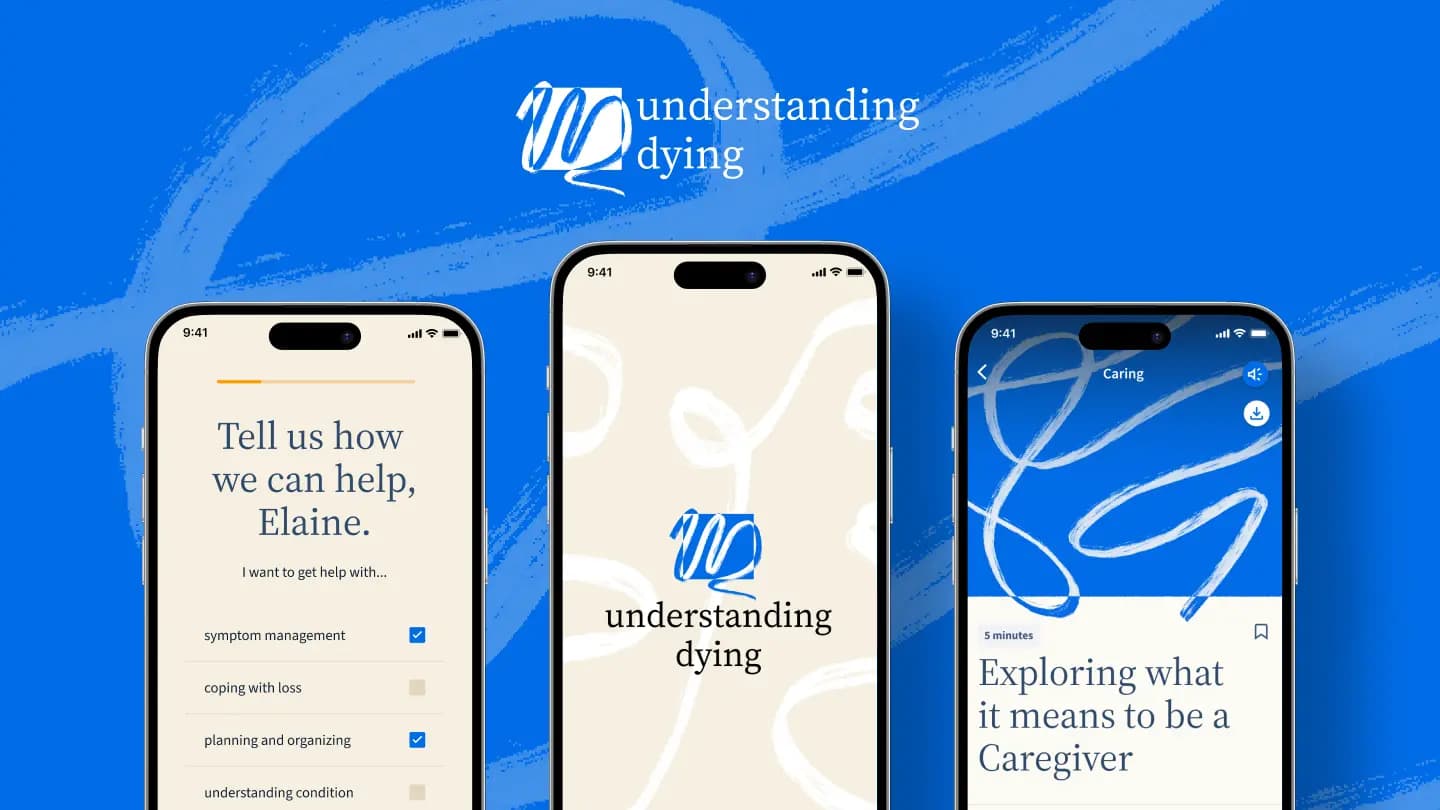
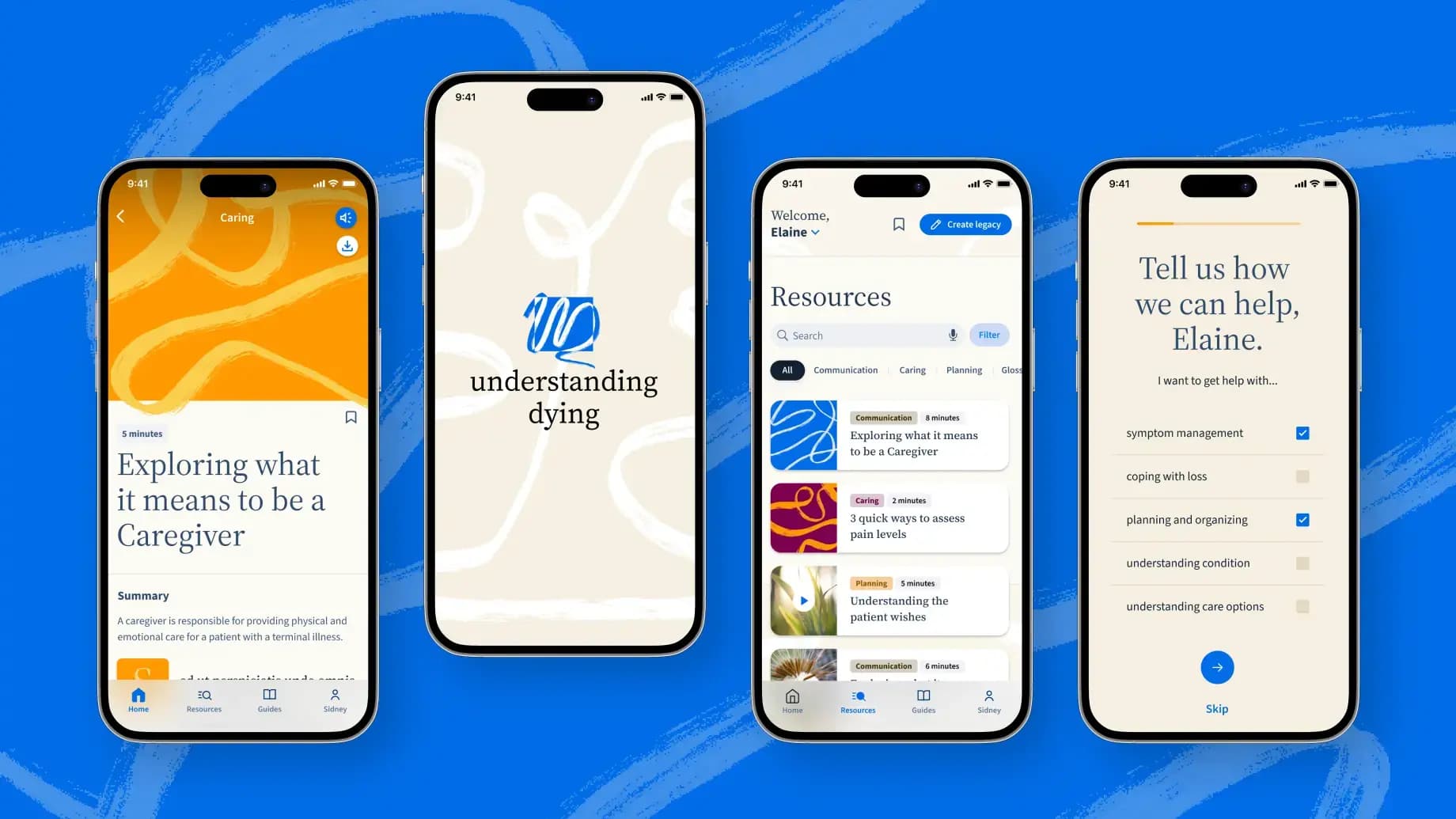
Understanding Dying, LLC had a vision of a mobile platform designed to support healthcare professionals, patients and families during the most delicate moments of end-of-life care. As a lean start-up, they didn't have the luxury of a 12-month discovery phase or a massive corporate budget. They needed an MVP that felt premium and acted as a sanctuary for memories, all while staying extremely cost-efficient. For the company, ALT was the most practical way to transform a deeply human need into a functional digital tool in record time.
The ALT solution
Trust was foundational to creativity, innovation and efficiency in the building phase. A three-person, colocated team used AI tools to build Understanding Dying’s MVP, leveraging:
- UI/UX research: The team led extremely valuable UI/UX research on security, guardrails and AI-driven interactions. This build phase shaped and affirmed the ALT functional designs.
- AI-accelerated development: The team integrated low-cost platforms (Contentful CMS, Supabase, Expo) with Cursor and Claude for prototyping and development.
- Collaborative client relationship: Understanding Dying’s Technical Lead worked closely with the ALT team, providing a seamless technical build that integrated high fidelity with the designed project.
- Client hand-off prep: Integrated analytics in Looker Studio minimized subscription costs.
The results
We moved from discovery to TestFlight beta testing in eight weeks using low-cost, AI-powered platforms, proving the ALT framework can handle complex, sensitive content movements with minimal overhead.
“If we’d had to do this the traditional way, we wouldn’t have had the funding to do this. It wouldn’t have launched. ALT made this happen.” – Dr. Timothy Short, Founder, Understanding Dying, LLC
Dare to rethink old paradigms
Every enterprise has a long tail of niche use cases — internal tools, specialized customer portals or experimental AI features — that are deemed too small to staff but too important to ignore. AI-First Lean Teams are designed specifically for this territory. We can turn these impossible projects into deployed reality in weeks, and for the case studies above, with 10/10 client satisfaction scores.
In traditional software development, the overhead of large teams, extensive documentation and multi-month discovery phases creates a high cost of entry. If a use case doesn't promise a massive, immediate return, it is buried in the backlog. ALT changes the math. By lowering the cost of experimentation and execution, we make it economically viable to pursue more niche, high-impact projects that move the needle.
It’s time to rethink the value threshold and elevate working software as the true measure of progress. Is your business primed for AI-First Lean Teams? Reach out to our team of experts today.
Stephanie Lewandowski
Director, Delivery