Three reasons you need a design process

Jesse Prehodick
Principal Product Designer
Ever felt a digital project spiraling into chaos? Scope creep, misaligned teams, and missed deadlines are common symptoms of a missing or broken design process. It’s the essential framework that transforms a great idea into a successful product that users love.
A well-defined design process isn't just a series of steps; it's your roadmap to innovation. It ensures every stakeholder is aligned, every decision is purposeful, and the final product not only meets business goals but also delights your customers.
Let's explore how a structured design process can bring clarity and confidence to your projects, and walk through the three core reasons you can't afford to work without one.
Why do you need a design process?
A design process is absolutely necessary for every project you work on. Here are three very important reasons why:
1. It sets clear expectations
When you share what the design process looks like with your client, it allows you to establish realistic project deliverables and deadlines together. Your client will know exactly what to expect from you and when to expect it, eliminating needless miscommunication later.
2. It puts clients at ease
Many clients begin working with us unaware of everything it takes to transform a good idea into a great final product. With a clear and concise design process in place, you can show your client exactly where their money is going during the design phase of their project.
3. It decreases the risk of failure
All aspects of a product’s design need consideration, and a good design process accounts for everything. Sure, you can create a great-looking product with visual design alone, but if there’s no thought behind its usability or no research behind it, you increase the risk that your product will fail.
The TELUS Digital design process
Our team has worked hard to refine our design process over the past few years to make sure it’s exactly what we need it to be. Today, it’s strong, and we know it works for any situation no matter the project or platform. But we also created it to be flexible so it can stretch to account for all the different types of problems we might need to solve for clients. We’ve broken our process out into two different frameworks: UX strategy and UX design. I’ve outlined each of them below so you can see what they entail.
1. UX strategy framework
Before opening Photoshop or even drawing a single line, we explore and determine the core business and user goals of the product. What are we setting out to accomplish with the product we’re designing? Who is it going to benefit and how? How can we design the best experience possible for users? These are the questions we have to ask ourselves on every project from day one.
Within the strategy framework, there are two different phases, each with multiple activities that can be included in an engagement.
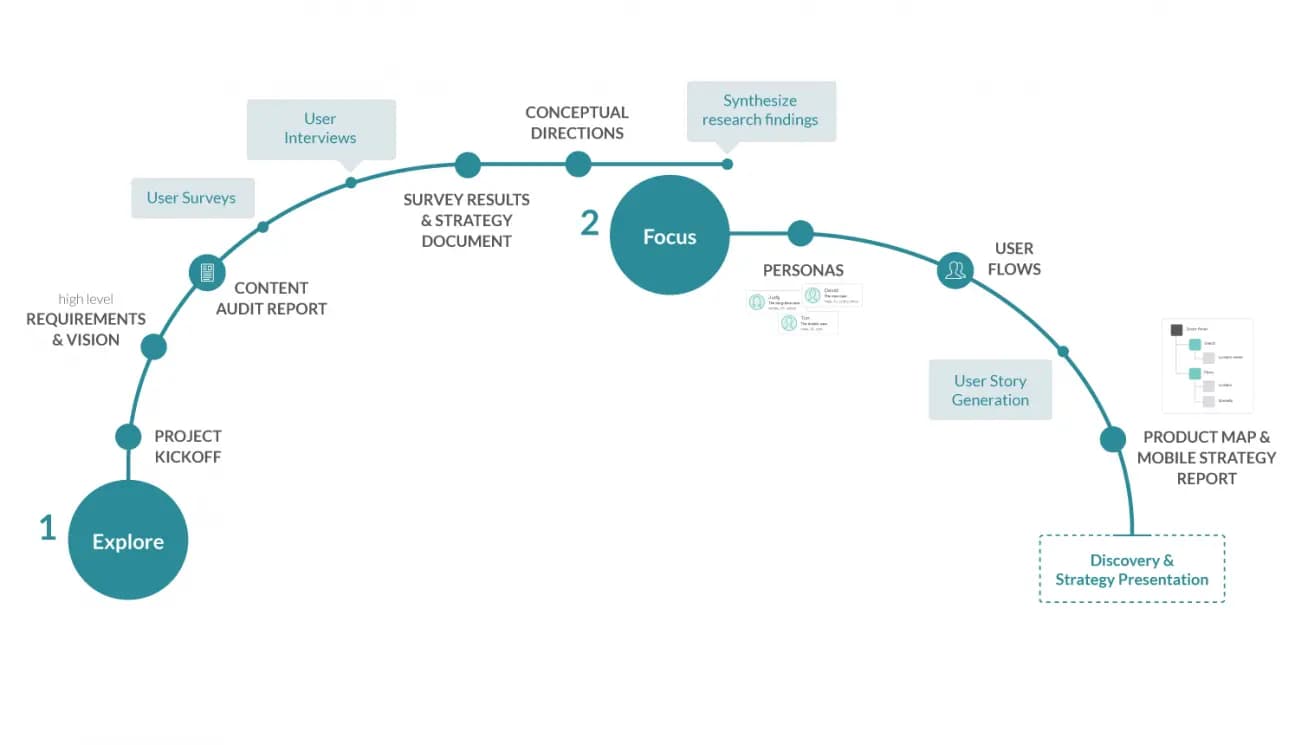
Explore
The first goal of our strategy framework is to expand the domain of knowledge through UX research and exploration. As it’s a lot more expensive to alter the direction of a mature project, the goal of the explore phase is to collect as much relevant information as possible early on in the project lifecycle.
- In-person kickoff workshops
- User surveys
- Conceptual directions
- User interviews
- Content audit
Focus
During the second phase, we synthesize research findings and facilitate scoping exercises, guiding the team in product definition. This is where the new app starts to take shape, as user stories and product maps are created.
- Personas
- User story generation
- Product map
The type of project will determine which of these activities are appropriate to engage in to learn more about the end goals.
2. UX design framework
Well-designed user experiences are the driving force behind product adoption, whether you’re creating a consumer-facing product or one for an enterprise client. While the UX strategy framework is all about expanding knowledge, investigating options and determining the best way to create your product, the UX design framework is all about the actual creation of the product.
TELUS Digital’s UX design framework is made up of four different phases that all work together to bring products to life. Depending on what a client needs and the end goals of a project, some of the phases below are optional (e.g., UI design and usability analysis phases). That said, we recommend going through all of the phases to ensure the best result possible for a product.
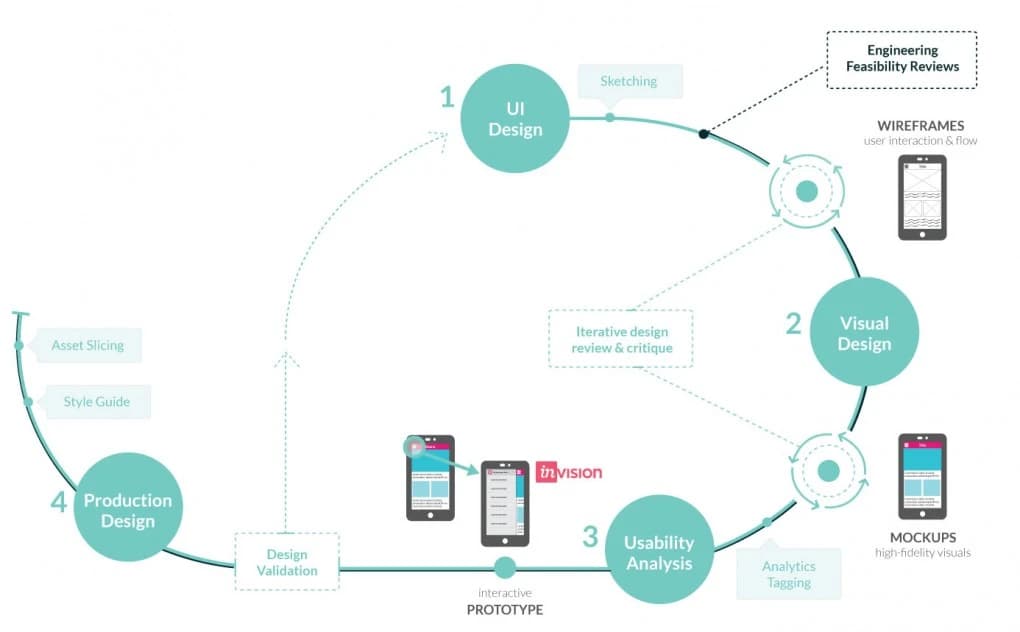
UI design
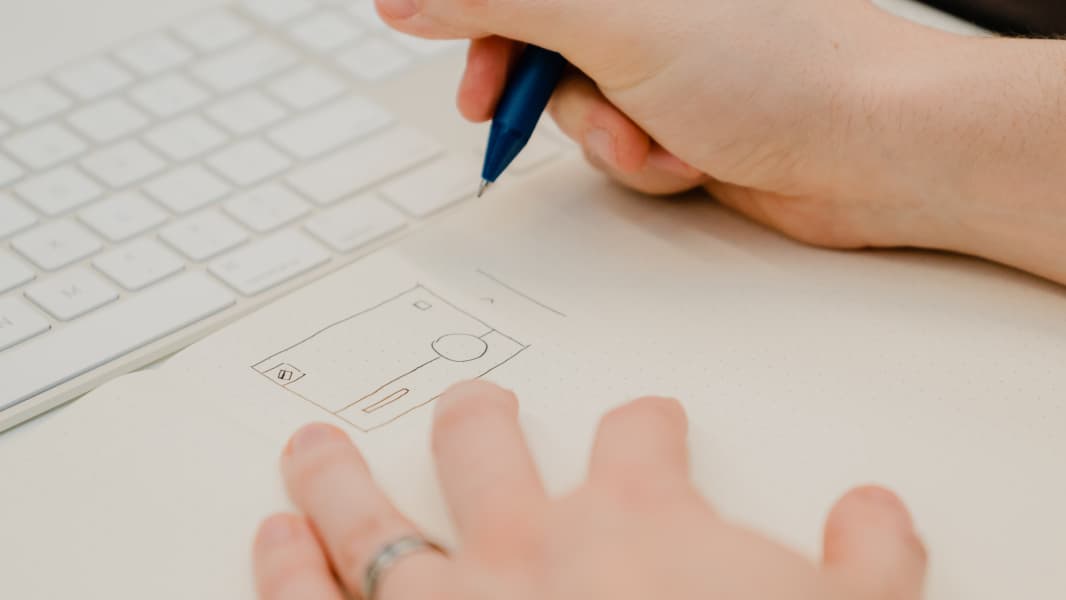
Based on the findings of the strategy framework, we define the interface, interactions and user flow through the experience. A lot of time is spent in whiteboarding and wireframing sessions to ensure we are designing the best possible experience for the user.
- Sketching and whiteboard sessions
- Wireframes
- InVision
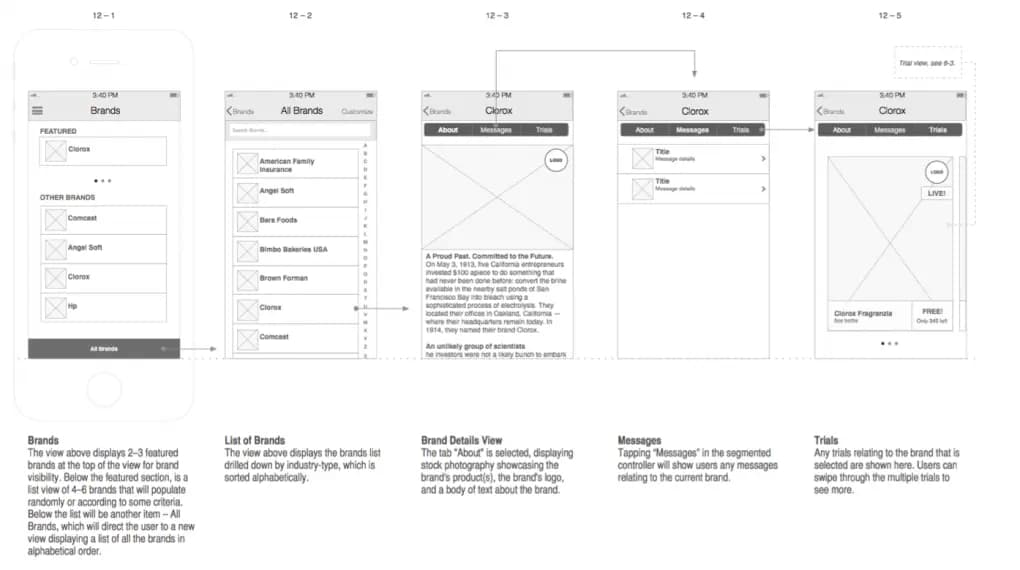
Visual design
Next, we continue to evolve the experience by applying high-fidelity visuals to each interface designed in the wireframe process. We have a couple of different deliverables depending on the type of project we are working on.
- Conceptual designs
- Visual designs
- Interaction design
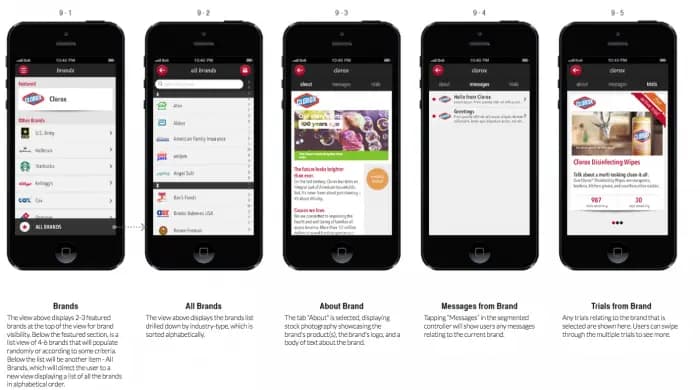
Usability analysis
Through systematic usability testing on high-fidelity prototypes, we validate the assumptions and design decisions made in phases one through three. For most projects, this is ongoing and occurs simultaneously with UX design, in both wireframes and visual design phases.
- InVision prototype
- Usability testing
- usertesting.com
Production design
After the clients have signed off on designs, we define a production style guide. By doing this, we properly document the experience for implementation and beyond. This is necessary for developers who will need guidance when it comes to implementing the designs you just created.
- Style guide
- Asset slicing
Find what works for you
We all have different ways of approaching new projects, whether they are personal or professional in nature. This is TELUS Digital’s design process, but I encourage you to think about and create a process that works for you.
After all, there is no single, magic way to get through a project and achieve outstanding results every time. Just remember that the best design processes are both strong and flexible. They allow you to take on any type of project and greatly increase the likelihood that what you’re creating will be successful.