Key takeaways
- TELUS Digital's AI-First Lean Teams (ALT) delivered a full healthcare mobile app MVP in eight weeks, against a traditional development estimate of nine to twelve months and quotes four times the final cost.
- The entire infrastructure stack runs on free tiers, keeping Understanding Dying's recurring platform costs near zero post-launch.
- Daily collaboration between the ALT team and Understanding Dying's founders meant consequential decisions were identified and resolved within single weekly cycles.
- Understanding Dying entered investor and hospital partner conversations with a live app, analytics, a functioning web presence and a research partner, not a prototype and a deck.
A vision too big for the budget, and too urgent to wait
Understanding Dying was built on nearly four decades of palliative care practice. Dr. Timothy Short, a family physician turned hospice medical director, spent his career watching patients, their families and care teams struggle to navigate the gaps in shared language, education and communication, leading to unwanted care and trauma at the end of life
He envisioned a mobile platform that would close that gap by giving patients and families the tools to preserve memories and define the values that would guide their end-of-life journey. To engage investors and hospital partnerships, the Understanding Dying team needed an MVP that could demonstrate value to end users.
However, the platform had to serve two audiences with fundamentally different needs: clinical providers who needed validated, trustworthy tools and resources, and patients and family caregivers going through one of the most emotionally complex experiences of their lives.
Using a traditional development framework, Dr. Short’s platform would require resources unavailable to a mission-driven start-up.
Daily collaboration with an AI-first team of three experts
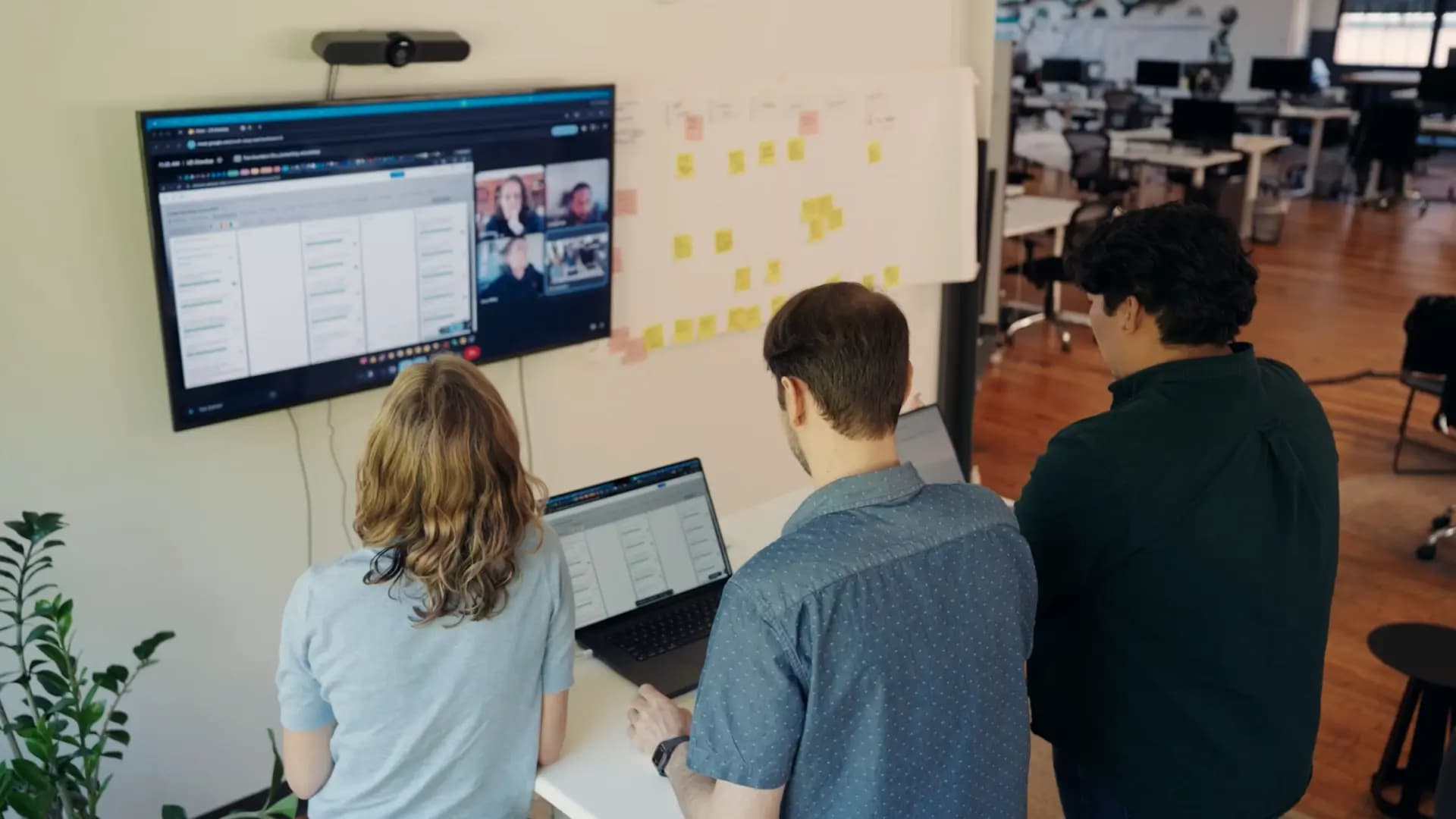
TELUS Digital deployed an AI-First Lean Teams engagement. One designer, one engineer and one strategist collaborated using AI tools to handle coding, testing and design in parallel. In daily stakeholder reviews, this team worked alongside the Understanding Dying team to evolve and refine the product in real time, deciding what to build next based on what they’d just learned. The full team was present and empowered to decide; nothing waited for a separate approval cycle.
That shared context shaped the UX in ways no requirements document could have specified. Every word on screen, every guardrail around when to surface a crisis resource, every decision on what the app should and shouldn’t do was guided by Dr. Short’s extensive palliative care experience, delivered in real time.
“If we’d had to do this the traditional way, we wouldn’t have had the funding to do it. It wouldn’t have launched. ALT made this happen.”
— Dr. Timothy Short, Founder, Understanding Dying, LLC
Building in a single codebase with minimal recurring cost
The team built a healthcare mobile app on a single React Native codebase deployable to both iOS and Android, on a stack chosen specifically for low cost and client maintainability.
Nearly every infrastructure platform runs on a free tier, keeping Understanding Dying’s maintenance cost low:
- Contentful manages app content.
- Supabase handles authentication, the database and backend logic.
- Expo builds and distributes the app to both app stores.
- Cloudinary hosts user-uploaded media for legacy posts.
- Firebase captures analytics.
- Looker Studio surfaces those analytics in a dashboard readable without a data background.
- OpenAI is the only pay-as-you-go cost, powering semantic search via embedding models and routing queries against a validated clinical resource library and returning results for healthcare providers in real time.
Architecture decisions happened in motion. For instance, in the project’s second week, the team pivoted from Firebase to Supabase as the primary backend after re-evaluating the project's actual data model requirements. Supabase offered a more flexible relational structure and a lower long-term maintenance burden for a start-up team with no dedicated engineering staff. The pivot was identified, evaluated and resolved within a single weekly cycle, with no timeline impact and no scope reduction.
“One of the things we can do now that we wouldn’t have been able to dream of doing two years ago is getting from an idea to a prototype in eight weeks. We’re not just building something in a vacuum — we’re building something for real people, using their experiences and needs as the driving force behind every feature.”
— Eric Verkerke, CEO, Understanding Dying, LLC
Working strategically, leveraging healthcare expertise
TELUS Digital's experience building within regulated healthcare environments shaped decisions as much as the technology did. The team identified that patient profiles in the app raised questions about regulations, a trigger that, if left unaddressed, would have required significantly more expensive database infrastructure and security architecture than the project budget could support.
TELUS Digital worked with the Understanding Dying team to rethink what the app actually needed to know. By redesigning the onboarding questions to collect user preferences rather than health information, the team minimized compliance costs for the MVP and refined Understanding Dying’s vision of the patient experience, shifting from a clinical intake model to one that is more personal and less intimidating. The project stayed on time, on budget and resulted in an even more helpful product for the end user.
Full scope delivered, and an ongoing partnership
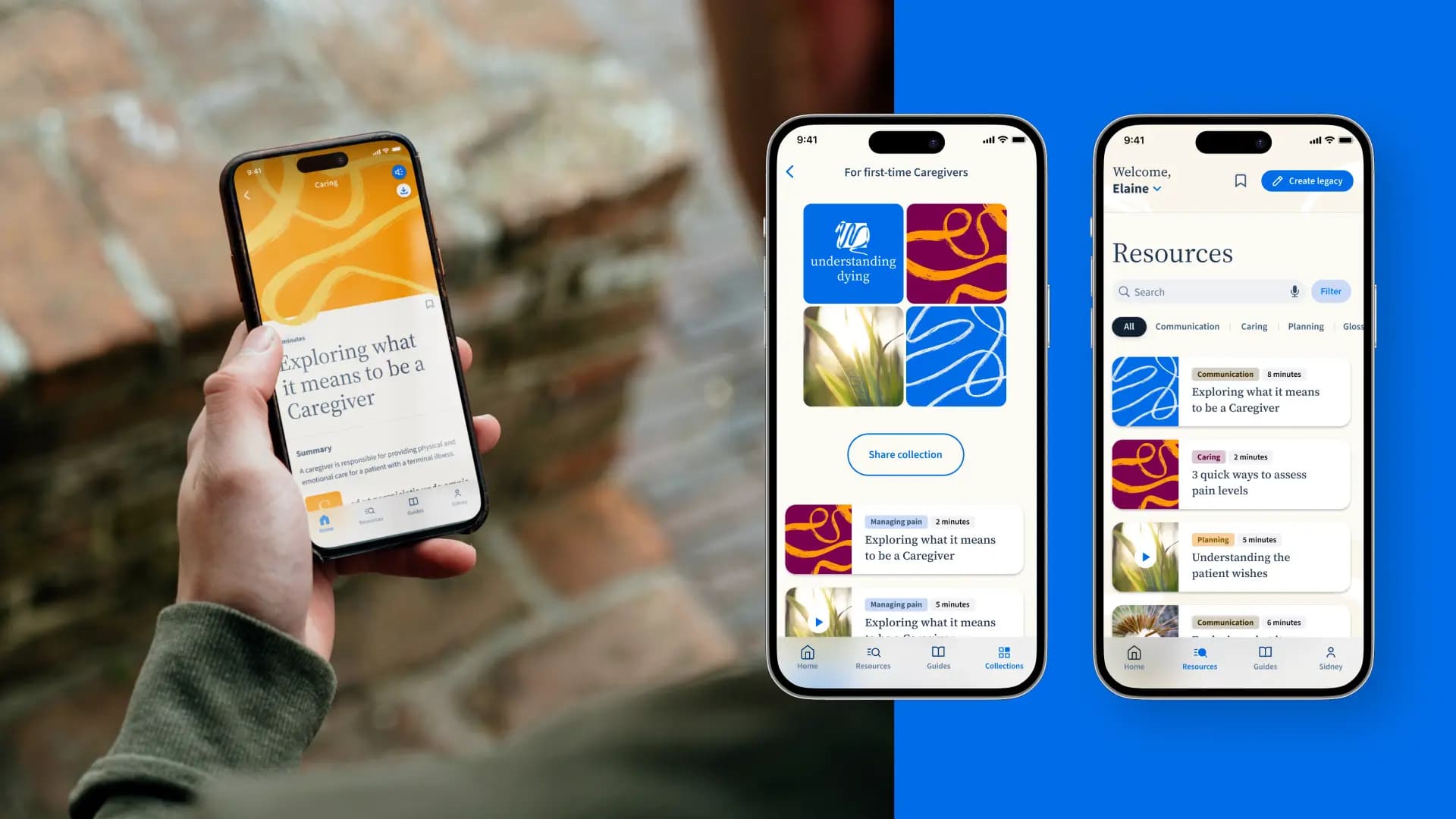
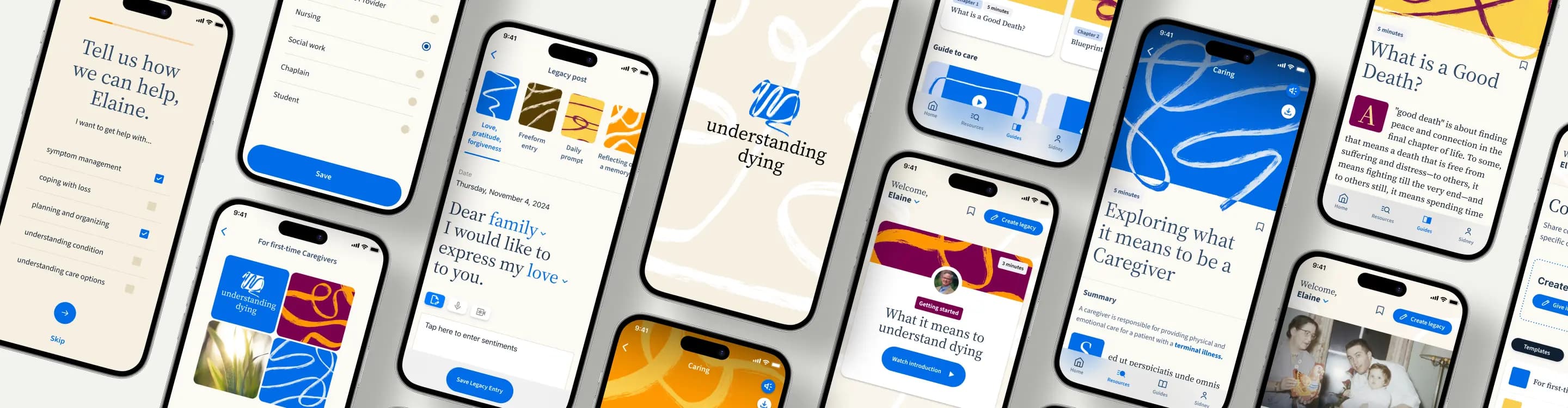
Understanding Dying entered investor and hospital partner conversations with a live app, Firebase analytics and a functioning web presence. The MVP delivered a dual-audience content experience: healthcare providers and family caregivers each enter through distinct onboarding flows.
- For healthcare professionals: Users access interactive tools that enable shared decision-making as well as a library of validated clinical resources and the ability to curate educational content for patients and families. AI is leveraged here for a semantic search feature.
- For patients and their family caregivers: Users document their values around end-of-life care, access educational content and share their legacy by preserving memories, including photos, messages and journal entries. That content can be shared with family members through a private shareable link.
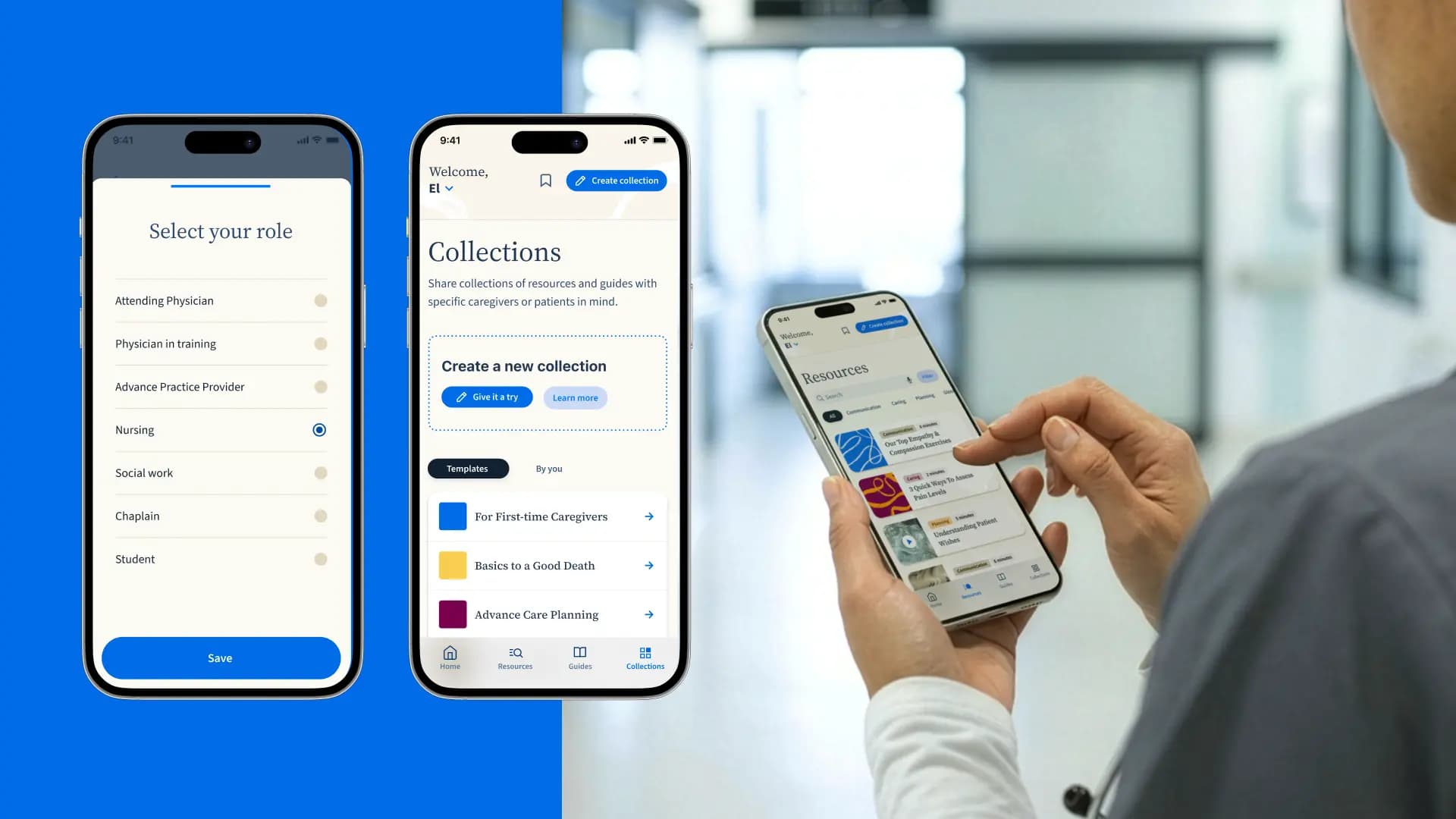
TELUS Digital handed off a complete operational platform, documented architecture, admin runbooks, content management guides, a beta operations playbook, a public launch checklist and a fully organized JIRA backlog of prioritized post-MVP features.
- 8 weeksFrom discovery to shipped MVP
- 4XEstimated cost reduction versus traditional development quotes
- 3Team members, spanning engineering, design and strategy
That’s everything Understanding Dying needs to run and extend their digital experience independently. Additionally, TELUS Digital continues to collaborate through ongoing usability research, feature validation and pilot sessions with first-time users. Lead Product Researcher Amy Wilde leverages her background in medical user testing research to surface new directions for the app based on most-used features. Her involvement keeps the design process grounded in real user behavior, which helps compress iteration cycles.
“The integration, the listening, standing and sitting shoulder to shoulder. It was collaborative. It was fast. It was nimble. It was a wonderful experience.”
— Dr. Timothy Short, Founder, Understanding Dying, LLC
About TELUS Digital AI-First Lean Teams (ALT)
ALT is TELUS Digital’s AI-accelerated delivery model for digital product development. Senior, lean teams use AI tooling to compress timelines and reduce cost without sacrificing enterprise-grade quality, security or scalability. ALT is built for clients who need to move fast, as is the case with MVP development, iterate on real user feedback and get the most out of every dollar spent on development.
ALT fits startups building their first product as well as innovation teams inside large organizations running big bets. What matters isn’t company size. It’s the nature of the problem, and the client’s willingness to build alongside the team.